
Dhaka 5:46 am, Saturday, 28 February 2026
News Title :
An international solidarity activist and other Palestinians were injured in an illegal Israeli settler attack on the town of Qusra, south of Nablus in the occupied West Bank, on February 27. শক্তিশালী ভূমিকম্পে কেঁপে উঠল সাতক্ষীরা, সিসি ক্যামেরার দৃশ্য। – World’s largest aircraft carrier reaches Israeli shores amid US military buildup ঝালকাঠিতে ডান্ডাবেড়ি পায়ে বাবার জানাজায় কার্যক্রম নিষিদ্ধ ছাত্রলীগ নেতা। ঝিনাইদহে অভ্যন্তরীণ কোন্দলে বিএনপির দু’গ্রুপের সংঘর্ষ, পুলিশসহ আহত ১০। যাত্রীবাহী বাস ও মোটরসাইকেলের সংঘর্ষের পর বাসে আগুন। শক্তিশালী ভূমিকম্পে কাঁপল দেশ, উৎপত্তিস্থল যেখানে। – The country was shaken by a powerful earthquake, the origin of which is. Palestinian workers face more challenges as Israel agrees to import 50,000 new labourers from India. ঢাকা মোহাম্মদপুর চলছে মাদকের বিরুদ্ধে বিশেয় অভিযান। A wave of Israeli air strikes hit the outskirts of Shmistar and Boudai west of Baalbek, along with areas near Halabta in northern Bekaa and the Western Mountain Range close to Hermel, marking another reported breach of the ceasefire.

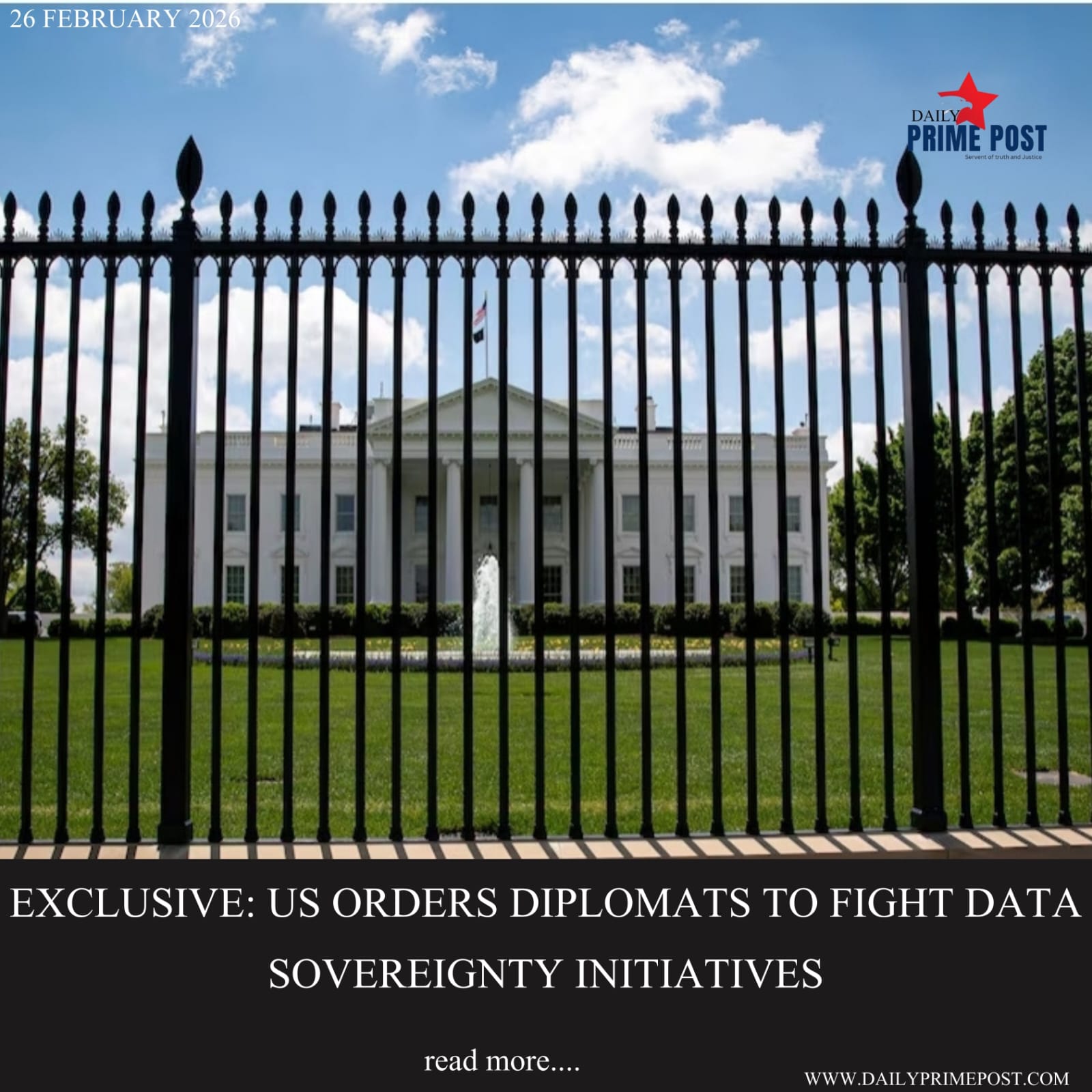
Exclusive: US orders diplomats to fight data sovereignty initiatives.

  • Afiaa zaman
  • Update Time : 09:21:31 am, Thursday, 26 February 2026
  • 22 Time View


President Donald Trump’s administration has ordered U.S. diplomats to lobby against attempts to regulate U.S. tech companies’ handling of foreigners’ data, saying in an internal diplomatic cable seen by Reuters that such efforts could interfere with artificial intelligence-related services.
Experts say the move signals the Trump administration is reverting to a more confrontational approach as some foreign countries seek limits around how Silicon Valley firms process and store their citizens’ personal information – initiatives often described as “data sovereignty” or “data localization.”
In the State Department cable, dated February 18 and signed by U.S. Secretary of State Marco Rubio, the agency said such laws would “disrupt global data flows, increase costs and cybersecurity risks, limit Artificial Intelligence (AI) and cloud services, and expand government control in ways that can undermine civil liberties and enable censorship.”
The cable said the Trump administration was pushing for “a more assertive international data policy” and that diplomats should “counter unnecessarily burdensome regulations, such as data localization mandates.
The State Department did not provide comment on the cable. However, it said the U.S. strongly supports cross-border data flows that promote growth and innovation while protecting privacy, safety, and free expression and stands ready to partner with countries that share those goals.
“We seek to counter unnecessarily burdensome regulations, such as data localization mandates,” it added.
Data sovereignty initiatives have gathered pace, particularly in Europe, as tensions have flared between the U.S. and the European Union over Washington’s protectionist trade policies and support for far-right political parties.


Write Your Comment

Your email address will not be published. Required fields are marked *

Save Your Email and Others Information

About Author Information

Daily Prime Post

Popular Post

An international solidarity activist and other Palestinians were injured in an illegal Israeli settler attack on the town of Qusra, south of Nablus in the occupied West Bank, on February 27.

Exclusive: US orders diplomats to fight data sovereignty initiatives.

Update Time : 09:21:31 am, Thursday, 26 February 2026


President Donald Trump’s administration has ordered U.S. diplomats to lobby against attempts to regulate U.S. tech companies’ handling of foreigners’ data, saying in an internal diplomatic cable seen by Reuters that such efforts could interfere with artificial intelligence-related services.
Experts say the move signals the Trump administration is reverting to a more confrontational approach as some foreign countries seek limits around how Silicon Valley firms process and store their citizens’ personal information – initiatives often described as “data sovereignty” or “data localization.”
In the State Department cable, dated February 18 and signed by U.S. Secretary of State Marco Rubio, the agency said such laws would “disrupt global data flows, increase costs and cybersecurity risks, limit Artificial Intelligence (AI) and cloud services, and expand government control in ways that can undermine civil liberties and enable censorship.”
The cable said the Trump administration was pushing for “a more assertive international data policy” and that diplomats should “counter unnecessarily burdensome regulations, such as data localization mandates.
The State Department did not provide comment on the cable. However, it said the U.S. strongly supports cross-border data flows that promote growth and innovation while protecting privacy, safety, and free expression and stands ready to partner with countries that share those goals.
“We seek to counter unnecessarily burdensome regulations, such as data localization mandates,” it added.
Data sovereignty initiatives have gathered pace, particularly in Europe, as tensions have flared between the U.S. and the European Union over Washington’s protectionist trade policies and support for far-right political parties.