
Dhaka 4:30 pm, Saturday, 28 February 2026
News Title :
The world on edge as Israel attacks Iran. বাড়ির উঠানে দাদির, সরিষাক্ষেতে নাতনির মরদেহ উদ্ধার। – The bodies of a grandmother were found in the yard of the house, and her granddaughter in a mustard field. দিনাজপুর মেডিকেলে ক্লাব কমিটির পদ নিয়ে ছাত্রদলের দু’পক্ষের হাতাহাতি। নরসিংদীতে কিশোরীকে ধর্ষণ ও হত্যা মামলার প্রধান আসামি নূরা গ্রেফতার। ইজারাদারের কাছে যুবদল নেতার ৫ লাখ টাকা চাঁদা দাবি, ওসির সামনে হাত-পা ভেঙে দেওয়ার হুমকি। – Jubo Dal leader demands Tk 5 lakh extortion from lessor, threatens to break hands and legs in front of OC. Zelenskyy says he’d accept nuclear weapons from UK, France ‘with pleasure’. সেলিনা হায়াৎ আইভী শোন অ্যারেস্ট। – Selina Hayat Ivy Shon Arrest. US lifts sanctions on top Malian officials as ties improve. An international solidarity activist and other Palestinians were injured in an illegal Israeli settler attack on the town of Qusra, south of Nablus in the occupied West Bank, on February 27. শক্তিশালী ভূমিকম্পে কেঁপে উঠল সাতক্ষীরা, সিসি ক্যামেরার দৃশ্য। –

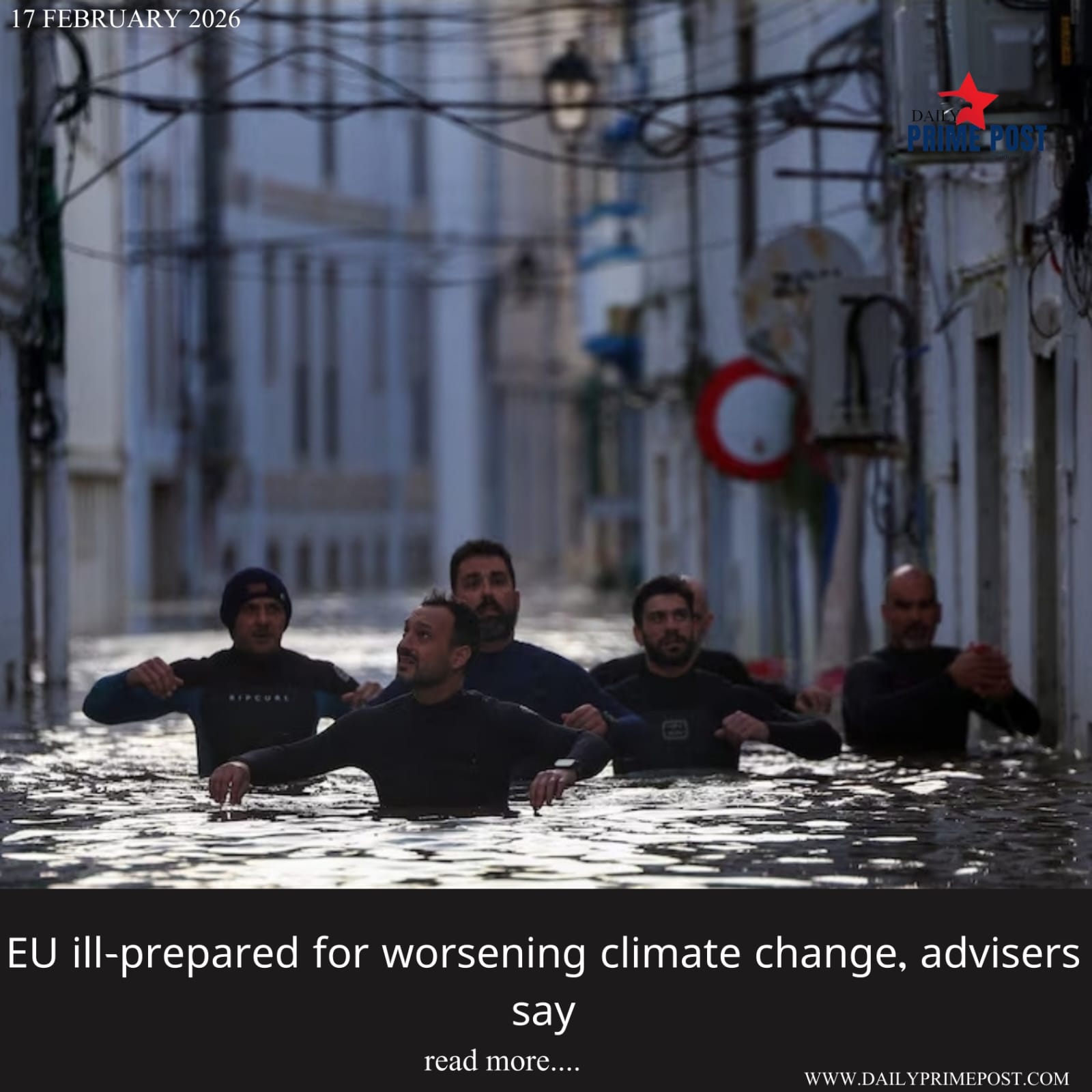
EU ill-prepared for worsening climate change, advisers say.


The European Union is not prepared for worsening climate change and should urgently step up its investments to protect people and infrastructure from mounting floods, wildfires and severe heatwaves, its independent advisers said on Tuesday.
Climate change has made Europe the world’s fastest-warming continent, according to the World Meteorological Organization, driving more frequent and intense heatwaves, flooding, coastal destruction and storms.
The economic damage to European infrastructure and buildings from weather and climate extremes is now 45 billion euros ($53.34 billion) per year, five times higher than in the 1980s, EU data show.
While the EU has ambitious targets to cut greenhouse gases – the main cause of climate change – its efforts have fallen short on adapting to the extreme weather climate change is already fuelling, according to the EU’s advisers, the European Scientific Advisory Board on Climate Change.
It is a lack of coherence, a lack of coordination, and also a lack of budget,” said the advisory board’s chair, Ottmar Edenhofer.
Without stronger preparations, extreme weather will further harm the EU’s competitiveness, straining public budgets and increasing security risks, the advisers said.
They recommended the EU agree to prepare, across all member states, for risks associated with 2.8 to 3.3°C of warming by 2100.


Write Your Comment

Your email address will not be published. Required fields are marked *

Save Your Email and Others Information

About Author Information

Daily Prime Post

Popular Post

The world on edge as Israel attacks Iran.

EU ill-prepared for worsening climate change, advisers say.

Update Time : 10:04:06 am, Tuesday, 17 February 2026


The European Union is not prepared for worsening climate change and should urgently step up its investments to protect people and infrastructure from mounting floods, wildfires and severe heatwaves, its independent advisers said on Tuesday.
Climate change has made Europe the world’s fastest-warming continent, according to the World Meteorological Organization, driving more frequent and intense heatwaves, flooding, coastal destruction and storms.
The economic damage to European infrastructure and buildings from weather and climate extremes is now 45 billion euros ($53.34 billion) per year, five times higher than in the 1980s, EU data show.
While the EU has ambitious targets to cut greenhouse gases – the main cause of climate change – its efforts have fallen short on adapting to the extreme weather climate change is already fuelling, according to the EU’s advisers, the European Scientific Advisory Board on Climate Change.
It is a lack of coherence, a lack of coordination, and also a lack of budget,” said the advisory board’s chair, Ottmar Edenhofer.
Without stronger preparations, extreme weather will further harm the EU’s competitiveness, straining public budgets and increasing security risks, the advisers said.
They recommended the EU agree to prepare, across all member states, for risks associated with 2.8 to 3.3°C of warming by 2100.