
Dhaka 2:02 pm, Saturday, 28 February 2026
News Title :
The world on edge as Israel attacks Iran. বাড়ির উঠানে দাদির, সরিষাক্ষেতে নাতনির মরদেহ উদ্ধার। – The bodies of a grandmother were found in the yard of the house, and her granddaughter in a mustard field. দিনাজপুর মেডিকেলে ক্লাব কমিটির পদ নিয়ে ছাত্রদলের দু’পক্ষের হাতাহাতি। নরসিংদীতে কিশোরীকে ধর্ষণ ও হত্যা মামলার প্রধান আসামি নূরা গ্রেফতার। ইজারাদারের কাছে যুবদল নেতার ৫ লাখ টাকা চাঁদা দাবি, ওসির সামনে হাত-পা ভেঙে দেওয়ার হুমকি। – Jubo Dal leader demands Tk 5 lakh extortion from lessor, threatens to break hands and legs in front of OC. Zelenskyy says he’d accept nuclear weapons from UK, France ‘with pleasure’. সেলিনা হায়াৎ আইভী শোন অ্যারেস্ট। – Selina Hayat Ivy Shon Arrest. US lifts sanctions on top Malian officials as ties improve. An international solidarity activist and other Palestinians were injured in an illegal Israeli settler attack on the town of Qusra, south of Nablus in the occupied West Bank, on February 27. শক্তিশালী ভূমিকম্পে কেঁপে উঠল সাতক্ষীরা, সিসি ক্যামেরার দৃশ্য। –

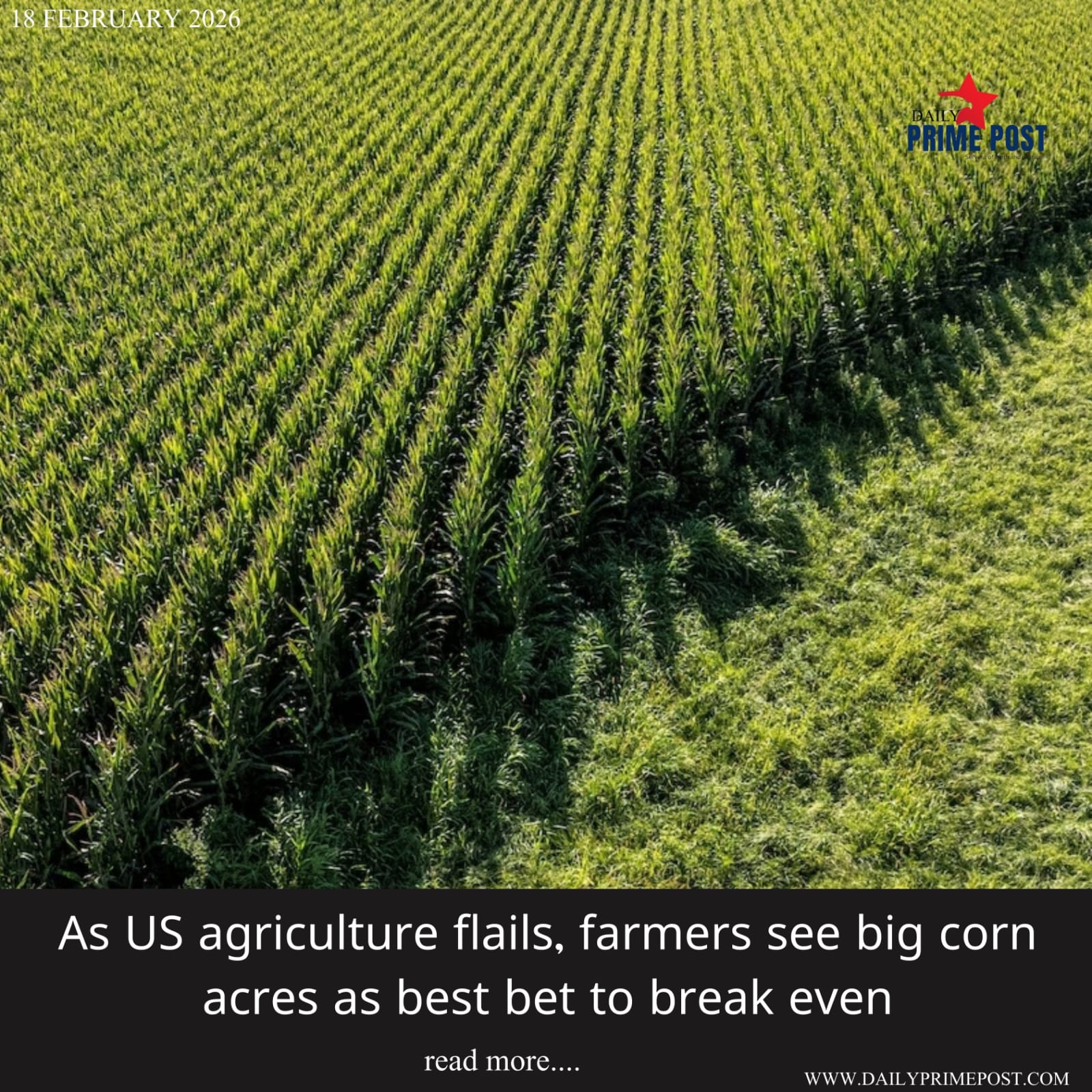
As US agriculture flails, farmers see big corn acres as best bet to break even.


U.S. farmers, though punished by slumping prices after last year’s monster corn harvest, are expected to cut back only slightly on their plantings of the grain in 2026 as they brace for a fourth straight year of narrow profit margins or even losses.
Farmers expect corn, the most widely grown U.S. crop, to hew close to break-even levels this year, supported by strong usage. Some see soybeans as riskier, given rising competition from Brazil and a volatile U.S. trade relationship with top buyer China.
Right now, you absolutely cannot make money on beans,” said Tim Gregerson, who farms in eastern Nebraska. “You can probably break even on corn, but you are going to have to have an extraordinary yield, or a price increase,” Gregerson said.
Most growers in America’s Midwest farm belt grow both crops, alternating what gets planted on each field from year to year to boost soil health. Many add wheat, sorghum, cotton or other crops to their rotations. But among farmers who have some flexible acres where they can plant anything, many see corn as their best bet.
Planting decisions for 2026, hashed out in the winter months, mark the first step in determining the amount of grain produced in the world’s largest corn exporting nation and the second-biggest soybean supplier after Brazil.
Decisions are particularly challenging this year after the U.S. Agriculture Department made unprecedented revisions in January to its estimate of the last season’s harvested corn acreage, which, along with larger-than-expected estimates of the 2025 corn yield and stocks on hand as of December 1, pushed down prices.


Write Your Comment

Your email address will not be published. Required fields are marked *

Save Your Email and Others Information

About Author Information

Daily Prime Post

Popular Post

The world on edge as Israel attacks Iran.

As US agriculture flails, farmers see big corn acres as best bet to break even.

Update Time : 10:50:11 pm, Wednesday, 18 February 2026


U.S. farmers, though punished by slumping prices after last year’s monster corn harvest, are expected to cut back only slightly on their plantings of the grain in 2026 as they brace for a fourth straight year of narrow profit margins or even losses.
Farmers expect corn, the most widely grown U.S. crop, to hew close to break-even levels this year, supported by strong usage. Some see soybeans as riskier, given rising competition from Brazil and a volatile U.S. trade relationship with top buyer China.
Right now, you absolutely cannot make money on beans,” said Tim Gregerson, who farms in eastern Nebraska. “You can probably break even on corn, but you are going to have to have an extraordinary yield, or a price increase,” Gregerson said.
Most growers in America’s Midwest farm belt grow both crops, alternating what gets planted on each field from year to year to boost soil health. Many add wheat, sorghum, cotton or other crops to their rotations. But among farmers who have some flexible acres where they can plant anything, many see corn as their best bet.
Planting decisions for 2026, hashed out in the winter months, mark the first step in determining the amount of grain produced in the world’s largest corn exporting nation and the second-biggest soybean supplier after Brazil.
Decisions are particularly challenging this year after the U.S. Agriculture Department made unprecedented revisions in January to its estimate of the last season’s harvested corn acreage, which, along with larger-than-expected estimates of the 2025 corn yield and stocks on hand as of December 1, pushed down prices.