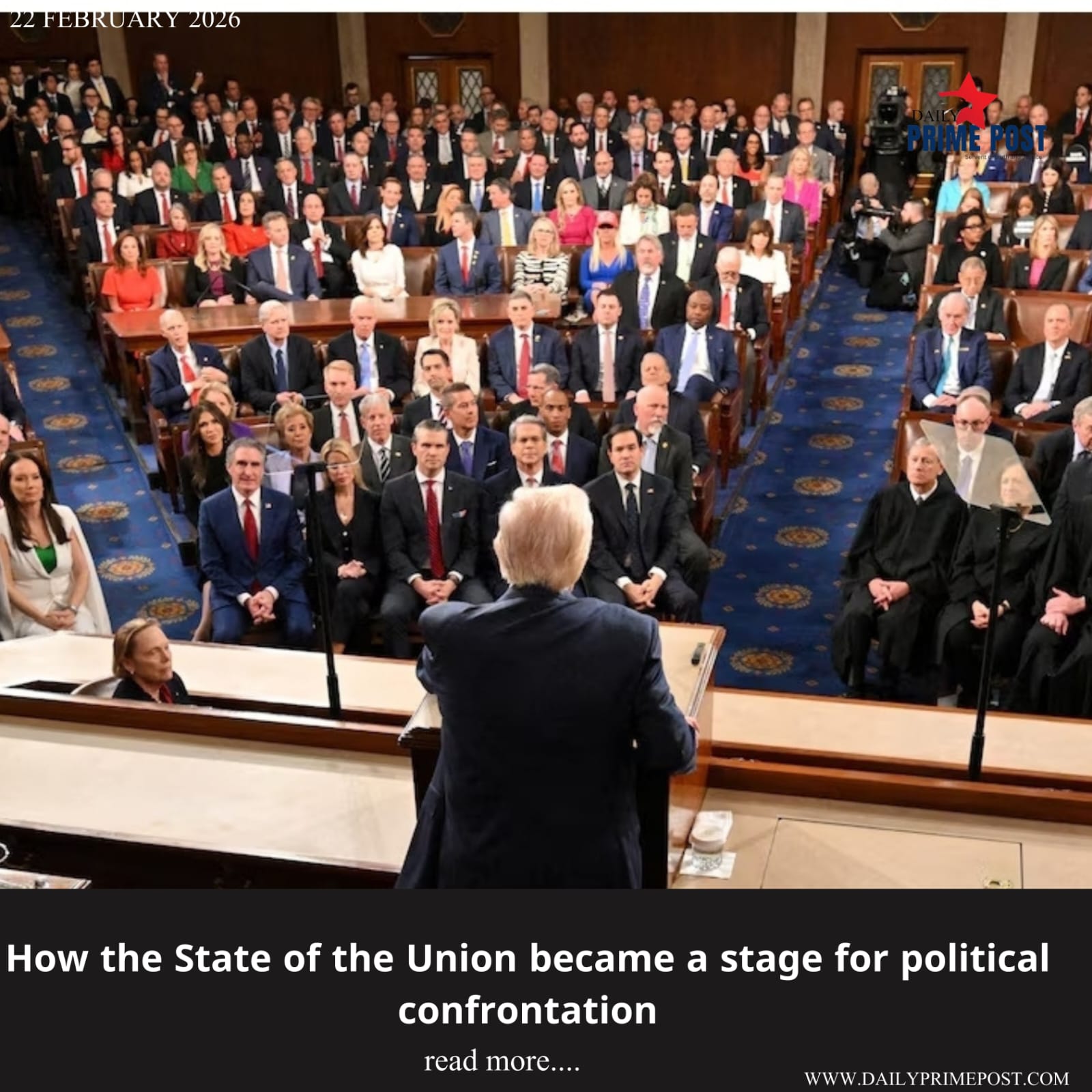
What began as a spare presidential report to the U.S. Congress has hardened into a prime-time pressure chamber shaped by an era of fierce polarization, with the State of the Union speech now unfolding as a long night of choreographed tension and open confrontation – a moment for presidents to wrest narrative from turmoil and craft the defining images of their time in power.
President Donald Trump will deliver his speech to Congress at 9 p.m. ET on Tuesday (0200 GMT on Wednesday), a far cry from President George Washington’s first address in 1790 – a brisk 1,089-word report that could be read in less time than many modern presidents take to clear their throats
In 1801, President Thomas Jefferson took a different approach by sending a written message rather than speaking in person, a practice that endured for more than a century. Only in 1913 did President Woodrow Wilson resume the tradition of delivering the message in person.
President Harry Truman in 1947 delivered the first televised State of the Union address, marking the beginning of a new era in presidential communication. President Lyndon Johnson in 1965 delivered the first prime-time State of the Union address to maximize television viewership.

Dhaka
9:34 pm, Saturday, 17 October 2026
News Title :
How the State of the Union became a stage for political confrontation
-
 Afiaa zaman
 - Update Time : 11:21:37 am, Sunday, 22 February 2026
- 120 Time View







Popular Post